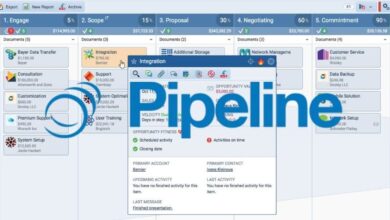
Starting with CRM platforms, these powerful tools are designed to revolutionize the way businesses manage customer relationships, providing a seamless and efficient solution for enhancing customer interactions and optimizing operations.
As we delve deeper into the world of CRM platforms, we will explore the key features, customization options, integration capabilities, data management techniques, reporting and analytics features, mobile accessibility benefits, deployment options, customer support services, scalability, and future trends that are shaping the industry.






Overview of CRM Platforms
CRM platforms, or Customer Relationship Management platforms, are software tools that help businesses manage interactions with current and potential customers. These platforms enable organizations to streamline processes, improve customer relationships, and drive sales growth.
CRM platforms offer a variety of features to support businesses in managing customer relationships effectively. Some of the main features include contact management, sales automation, marketing automation, customer service and support, analytics and reporting, and integration with other business tools.
Types of CRM Platforms
- Operational CRM: Focuses on automating and improving customer-facing processes such as sales, marketing, and customer service.
- Analytical CRM: Utilizes customer data analysis to gain insights and improve decision-making related to sales, marketing, and customer service strategies.
- Collaborative CRM: Emphasizes communication and collaboration among different departments within an organization to enhance customer relationships.
- Campaign Management CRM: Helps businesses plan, execute, and track marketing campaigns to target and engage customers effectively.
Common Features of CRM Platforms
CRM platforms offer a wide range of features designed to streamline customer interactions, enhance efficiency, and improve overall customer relationship management. These features are essential for businesses looking to optimize their customer service and sales processes.
Customer Database Management
- CRM platforms provide a centralized database where businesses can store all customer information, including contact details, purchase history, preferences, and interactions.
- Having all customer data in one place allows for a comprehensive view of each customer, enabling personalized communication and targeted marketing campaigns.
- By accessing a single source of truth, businesses can better understand their customers and tailor their interactions to meet individual needs.
Lead Management and Tracking
- CRM platforms help businesses track leads from the initial contact to conversion, ensuring that no potential sales opportunity is missed.
- Automated lead scoring helps prioritize leads based on their likelihood of conversion, allowing sales teams to focus on high-value prospects.
- By monitoring lead interactions and engagement, businesses can identify trends and adjust their strategies to improve lead conversion rates.
Communication Tools
- CRM platforms offer integrated communication tools such as email automation, SMS messaging, and live chat to facilitate seamless interactions with customers.
- Automated communication workflows ensure timely responses to customer inquiries, nurturing leads and strengthening relationships.
- Personalized communication templates and scheduling features help businesses engage with customers in a targeted and efficient manner.
Analytics and Reporting
- CRM platforms provide detailed analytics and reporting capabilities to track key performance indicators, customer behavior, and sales metrics.
- By analyzing data insights, businesses can make informed decisions, identify opportunities for improvement, and measure the success of their customer relationship management strategies.
- Customizable dashboards and real-time reporting tools offer visibility into performance trends, allowing for quick adjustments and optimizations.
Customization Options in CRM Platforms
Customization plays a crucial role in maximizing the efficiency and effectiveness of CRM platforms for businesses. By tailoring the CRM system to meet specific needs and requirements, organizations can streamline processes, enhance customer interactions, and drive overall growth.
Custom Fields and Modules
One of the key customization options in CRM platforms is the ability to create custom fields and modules. This feature allows businesses to capture unique data points that are important for their operations but may not be included in standard CRM templates.
- Custom fields can be tailored to gather specific information about customers, products, or interactions.
- Custom modules enable businesses to organize data in a way that aligns with their unique processes and workflows.
- By incorporating custom fields and modules, businesses can gain deeper insights and make more informed decisions.
Workflow Automation
CRM platforms offer advanced workflow automation capabilities that can be customized to match the specific requirements of a business. This functionality streamlines repetitive tasks, minimizes manual intervention, and ensures consistency in processes.
- Businesses can create custom workflows to automate lead nurturing, sales follow-ups, and customer support processes.
- Automation rules can be customized based on triggers, conditions, and actions defined by the organization.
- By customizing workflow automation, businesses can improve efficiency, reduce errors, and deliver a seamless customer experience.
Integration and API Customization
CRM platforms offer integration capabilities with other business tools and systems through APIs, allowing for seamless data exchange and a unified view of customer information. Customizing integrations and APIs enables businesses to connect CRM platforms with their existing technology stack.
- Custom integrations can be developed to synchronize data between CRM and other applications such as marketing automation tools, accounting software, or e-commerce platforms.
- API customization allows businesses to extend the functionality of CRM platforms by integrating with proprietary or third-party applications.
- By leveraging integration and API customization, businesses can create a connected ecosystem that enhances data visibility and collaboration across departments.
Integration Capabilities of CRM Platforms
CRM platforms offer the ability to seamlessly integrate with other business tools and systems, enhancing their overall functionality and efficiency. This integration allows for a more holistic view of customer interactions, data management, and communication across various departments within an organization.
Popular Integrations Enhancing CRM Functionalities
- Integration with Email Marketing Platforms: CRM platforms can integrate with email marketing tools such as MailChimp or Constant Contact, allowing businesses to send targeted emails to customers based on their interactions and behaviors within the CRM system.
- Integration with Accounting Software: Integrating CRM platforms with accounting software like QuickBooks or Xero enables businesses to streamline invoicing, payment tracking, and financial reporting processes, providing a more comprehensive view of customer transactions.
- Integration with E-commerce Platforms: CRM platforms can integrate with e-commerce platforms like Shopify or Magento, enabling businesses to track customer purchases, analyze shopping behavior, and personalize marketing efforts based on online transactions.
Benefits of Seamless Integration for Business Operations
- Improved Data Accuracy and Consistency: Integrating CRM platforms with other systems eliminates manual data entry errors and ensures that customer information is up-to-date and consistent across all tools, improving decision-making processes.
- Enhanced Communication and Collaboration: Seamless integration allows different departments to access and share customer data in real-time, fostering collaboration and improving communication between sales, marketing, and customer service teams.
- Efficient Workflows and Automation: Integrating CRM platforms with other business tools automates repetitive tasks, streamlines processes, and reduces the need for manual intervention, increasing productivity and efficiency within the organization.
Data Management in CRM Platforms
Data management plays a crucial role in CRM platforms, as it involves the organization, storage, and analysis of customer data to improve customer relationships and drive business growth.
Role of Data Management
Data management in CRM platforms involves collecting, storing, and organizing customer information such as contact details, interactions, purchase history, and preferences. This data serves as the foundation for personalized marketing, sales, and customer service strategies.
Handling and Analysis of Customer Data
CRM platforms handle customer data by centralizing it in a secure database accessible to authorized users. They analyze this data using advanced analytics tools to identify trends, predict customer behavior, and make data-driven decisions to enhance customer satisfaction and retention.
Best Practices for Data Accuracy and Security
- Regularly update and cleanse data to ensure accuracy and relevance.
- Implement data validation rules to prevent duplicate or incorrect entries.
- Restrict access to sensitive customer information to authorized personnel only.
- Encrypt data to protect it from unauthorized access or breaches.
- Monitor data usage and audit trails to track changes and maintain data integrity.
Reporting and Analytics Features in CRM Platforms
Reporting and analytics features in CRM platforms play a crucial role in helping businesses make informed decisions based on data-driven insights. By utilizing these capabilities, organizations can better understand customer behavior, track performance metrics, and identify areas for improvement.
Key Performance Indicators (KPIs) in CRM Analytics
- Customer Acquisition Cost (CAC): This metric helps businesses measure the cost incurred to acquire a new customer. By tracking CAC, companies can evaluate the effectiveness of their marketing and sales strategies.
- Customer Lifetime Value (CLV): CLV allows businesses to estimate the total revenue a customer is expected to generate over their entire relationship with the company. This helps in prioritizing high-value customers and tailoring marketing efforts accordingly.
- Sales Conversion Rate: The sales conversion rate indicates the percentage of leads or prospects that ultimately convert into paying customers. Monitoring this KPI helps in optimizing the sales process and identifying potential bottlenecks.
- Customer Retention Rate: This metric measures the percentage of customers that continue to do business with the company over a specific period. A high customer retention rate signifies customer satisfaction and loyalty.
Mobile Accessibility of CRM Platforms
Mobile accessibility is a crucial aspect of CRM platforms in today’s fast-paced business environment. With the increasing reliance on mobile devices, having access to CRM tools on-the-go allows users to stay connected, productive, and responsive at all times.
Enhanced User Experience and Productivity
Mobile applications for CRM platforms enhance user experience by providing flexibility and convenience. Users can access important customer data, update records, and communicate with clients seamlessly, regardless of their location. This accessibility leads to increased productivity as tasks can be completed in real-time, without the need to wait until they are back in the office.
- Update customer information while on a sales call.
- View and respond to customer inquiries instantly.
- Schedule follow-up appointments or meetings on-the-go.
- Track sales progress and performance from anywhere.
Tasks on CRM Platforms via Mobile Devices
Mobile accessibility enables users to perform a variety of tasks efficiently, such as managing leads, tracking customer interactions, and analyzing sales data. By utilizing CRM platforms on mobile devices, businesses can ensure that no opportunity is missed, and customer relationships are nurtured effectively.
Having access to CRM tools on mobile devices empowers users to stay connected and engaged with customers, ultimately driving better relationships and business outcomes.
CRM Platform Deployment Options
When it comes to CRM platform deployment options, businesses have to consider whether to opt for cloud-based solutions or on-premise installations. Each deployment method comes with its own set of advantages and disadvantages, so it’s crucial to weigh the factors before making a decision.
Cloud-Based CRM Platforms
Cloud-based CRM platforms are hosted on the vendor’s servers and accessed through the internet. Here are some key points to consider:
- Accessibility: Users can access the CRM system from anywhere with an internet connection.
- Scalability: Cloud-based solutions are easily scalable to accommodate business growth.
- Cost-Effectiveness: Typically, cloud-based CRM platforms have lower initial costs and predictable monthly fees.
On-Premise CRM Platforms
On-premise CRM platforms are installed and managed on the company’s own servers and infrastructure. Here are some factors to keep in mind:
- Data Control: Businesses have full control over their data and security measures.
- Customization: On-premise solutions offer more flexibility for customization to meet specific business needs.
- Security: Some businesses prefer on-premise deployments for heightened data security and compliance reasons.
Customer Support and Training Resources
Customer support and training resources are essential components of successful CRM platform usage, ensuring users can maximize the benefits of the system and address any issues effectively.
Customer Support Services
CRM platform providers typically offer various customer support services to assist users with any questions or problems they may encounter. These services may include:
- 24/7 online chat support for immediate assistance
- Phone support for more complex issues
- Email support for non-urgent inquiries
- Knowledge base or FAQ section for self-help
- Community forums for peer-to-peer support
Training Resources Importance
Training resources play a vital role in ensuring users can effectively utilize CRM platforms to their full potential. Proper training can help users:
- Understand the features and functionality of the CRM platform
- Learn best practices for data management and utilization
- Improve efficiency and productivity in using the system
- Address any challenges or roadblocks in implementation
Examples of Training Materials
CRM platform providers often offer a variety of training materials or resources to users, such as:
- Video tutorials demonstrating key features and processes
- Online webinars for interactive learning sessions
- User guides and manuals for reference and step-by-step instructions
- On-site training sessions for hands-on experience and personalized guidance
Scalability and Flexibility of CRM Platforms
CRM platforms are designed to grow and evolve alongside businesses, accommodating their changing needs and expanding operations. The scalability and flexibility features within CRM platforms play a crucial role in ensuring adaptability to meet the dynamic requirements of businesses.
Scalability Features of CRM Platforms
- Cloud-Based Infrastructure: CRM platforms hosted on the cloud can easily scale up or down based on the business requirements, allowing seamless expansion without the need for additional hardware.
- Customizable Modules: Businesses can add or remove modules within CRM platforms as needed, enabling them to tailor the system to fit their evolving processes.
- Multi-User Support: CRM platforms can support a growing number of users without compromising performance, ensuring that as the business expands, more employees can access the system simultaneously.
Flexibility Features of CRM Platforms
- Open API Integrations: CRM platforms with open APIs enable easy integration with third-party applications, providing flexibility to connect with other tools and systems used by the business.
- Workflow Automation: Automation capabilities in CRM platforms allow businesses to streamline processes, adapt workflows, and make changes to meet new requirements without significant manual intervention.
- Scalable Data Storage: CRM platforms offer scalable data storage options, ensuring that businesses can store and manage increasing volumes of customer data efficiently as they grow.
Businesses across various industries have successfully scaled their operations using CRM platforms. For example, a global e-commerce company utilized the scalability features of their CRM platform to manage a growing customer base and expand their sales channels effectively. This demonstrates how CRM platforms can support businesses in scaling their operations while maintaining efficiency and adaptability.
Future Trends in CRM Platforms
Artificial Intelligence (AI) and Machine Learning (ML) are revolutionizing the CRM landscape, offering businesses advanced capabilities to enhance customer relationships and drive growth. These technologies are reshaping the future of CRM platforms by enabling automation, predictive analytics, and personalized customer experiences.
AI-Powered Automation and Personalization
AI-powered automation in CRM platforms streamlines repetitive tasks, such as data entry and lead scoring, freeing up valuable time for sales and marketing teams to focus on high-value activities. Machine learning algorithms can analyze vast amounts of customer data to predict trends and behaviors, allowing businesses to tailor their interactions and offerings to individual preferences.
- Automating routine tasks like email responses, scheduling appointments, and updating contact information.
- Personalizing customer interactions based on past behaviors, preferences, and demographics.
- Utilizing AI-powered chatbots for real-time customer support and engagement.
Predictive Analytics for Enhanced Decision-Making
Predictive analytics capabilities in CRM platforms empower businesses to forecast customer needs, identify potential opportunities, and mitigate risks. By analyzing historical data and patterns, AI and ML algorithms can provide actionable insights for more informed decision-making and targeted marketing strategies.
- Anticipating customer behavior and preferences to tailor product recommendations and promotions.
- Forecasting sales trends and identifying cross-selling or upselling opportunities.
- Detecting potential churn risks and implementing proactive retention strategies.
Enhanced Customer Engagement and Loyalty
AI-driven CRM platforms enable businesses to deliver hyper-personalized experiences that foster customer loyalty and advocacy. By leveraging predictive analytics and automation, companies can engage customers across multiple channels in a cohesive and relevant manner, building lasting relationships and brand affinity.
- Creating targeted marketing campaigns based on individual preferences and purchase history.
- Implementing dynamic pricing strategies to optimize revenue and customer satisfaction.
- Utilizing sentiment analysis to gauge customer feedback and sentiment for proactive service improvements.
Final Conclusion
In conclusion, CRM platforms offer a comprehensive suite of tools and functionalities that empower businesses to build stronger relationships with customers, drive growth, and stay ahead of the competition. By leveraging the power of CRM platforms, businesses can unlock new opportunities and achieve long-term success in today’s dynamic market.

Hi, I’m Lauren. As a digital enthusiast and storyteller, I love breaking down complex ideas into easy-to-read articles. My goal is to provide readers with fresh perspectives and helpful solutions through every piece I write.